Blog

  • Smart Habit Tracking: AI Alerts for Your Personal Progress Dashboard

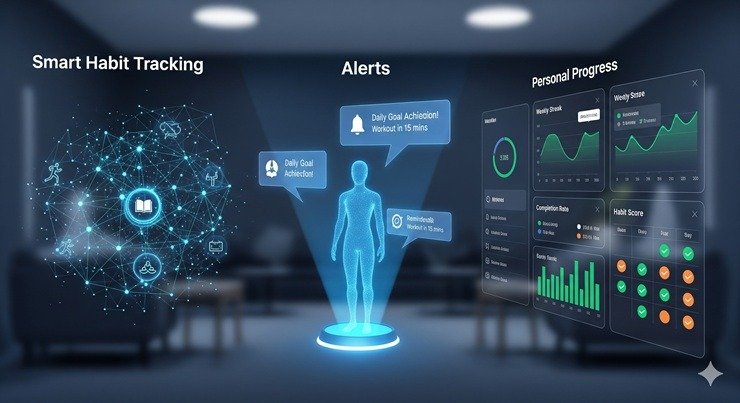
    Smart Habit Tracking

    We have all experienced that feeling of excitement when we set a new goal! We start by downloading the latest habit-tracking app, buying a crisp new journal, or sticking a motivational poster on the wall. Whether it is drinking eight glasses of water, meditating for ten minutes, or writing 500 words a day, the initial enthusiasm is a powerful force. We diligently check off the boxes for the first few days, maybe even a week. The streak becomes a badge of honor.

    Then life intervenes with a busy day, an unexpected errand, or just plain fatigue disrupts our progress. Missing a day breaks the once-pristine streak. Guilt creeps in, motivation fades, and soon the app or journal is abandoned.

    The fundamental flaw in traditional habit tracking is not the intention; it is the implementation that goes a long way. Most systems are passive. They are digital ledgers, patiently waiting for you to report your successes or failures. They are reactive, not proactive. They show you the data, but they rarely provide the wisdom.

    But what if your habit tracker could be more than just a passive observer? What if it could be an active, intelligent partner in your journey of self-improvement? Welcome to the new era of personal development, enhanced by Artificial Intelligence. Smart habit tracking, which leverages powerful AI services to provide AI-driven alerts and dynamic progress dashboards, is transforming the way we build a better version of ourselves.

    The Limits of the Humble Checkbox

    For decades, the core principle of habit tracking has been based on Jerry Seinfeld’s “Don’t Break the Chain” method. While effective in its simplicity, this model has significant limitations in our complex, data-rich world:

    • Insight Scarcity: A calendar full of ‘X’s tells you that you did something, but it does not tell you why or how. It does not reveal the hidden patterns. Did you consistently miss your morning run on days following a late night? Did your writing output double on days you meditated? A simple checkbox cannot connect these dots.
    • The “All-or-Nothing” Mindset: Breaking a long streak can feel catastrophic, leading many to abandon the habit altogether. This rigid system doesn’t account for the nuances of human life. It punishes deviation instead of encouraging recovery.
    • Generic Reminders: “Don’t forget to drink water!” Your phone pings you with a generic reminder at 2 PM. It is the same reminder everyone else gets, regardless of your personal schedule, current activity, or actual hydration levels. More often, these “dumb” notifications become background noise we learn to ignore.
    • Reactive Analysis: You are the one responsible for looking at the data and figuring out what went wrong. It requires a level of self-awareness and discipline that is often in short supply, especially when you are already struggling with a habit.

    Enter AI: Your Personal Data Scientist and Coach

    Imagine having a personal coach who watches over your progress 24/7, understands your unique rhythms, and offers tailored advice at the exact moment you need it. This is the promise of AI-integrated habit tracking. By leveraging machine learning algorithms, these smart systems move beyond simple data logging to provide predictive, personalized, and actionable insights.

    The AI does not just see a collection of data points; instead, it recognizes a pattern. It analyzes your inputs of habit completions, journal entries, sleep data from your watch, and meetings from your calendar to understand the intricate web of your life. It becomes your personal data scientist, dedicated to one subject, and that’s you.

    This intelligent analysis fuels the two most revolutionary features of modern habit-tracking platforms – AI alerts and the smart personal progress dashboard.

    The Power of the Smart Alert: More Than Just a Nudge

    The difference between a standard reminder and an AI-powered alert is the same as that between a generic road sign and a GPS offering a real-time detour around a traffic jam. Smart alerts are all about context and timing.

    Here’s how they are changing the game:

    Predictive Alerts: By recognizing your past patterns, the AI can anticipate future challenges.

    • Example: The system notices you almost always skip your 30-minute reading goal on days you have back-to-back meetings after 3 PM. It might send an alert at 11 AM: “Your afternoon looks busy today. It’s a great time to get your reading session in now to stay on track.”

    Contextual Alerts: These systems can integrate with your phone’s other functions, like GPS and your calendar, to provide hyper-relevant nudges.

    • Example: You have set a goal to go to the gym three times a week. Your phone’s GPS notes that you are driving past your gym on your way home from work, and your calendar shows you have no evening appointments. You might get an alert: “You’re just two minutes from the gym, and your evening is free. Perfect chance for a workout!”

    Motivational Alerts: The AI learns what kind of encouragement works for you. Instead of just celebrating a streak, it can frame your progress in more meaningful ways.

    • Example: “Great job hitting your water intake goal! This is the 15th day of this month. At this rate, you are building a truly automatic healthy habit.” This reframes the effort from a daily chore to a long-term identity shift.

    Course-Correction Alerts: This is where AI truly shines as a coach. When you stumble, it helps you get back up intelligently.

    • Example: You have missed your “code for one hour” goal for two days in a row. Instead of a guilt-inducing “You broke your streak!” message, a smart alert might say: “Life can get in the way. How about we aim for a manageable 20 minutes today just to regain momentum? Small wins are powerful.” This approach champions consistency over intensity and prevents total abandonment.

    The Intelligent Dashboard: Your Progress Story, Visualized

    The second pillar of this revolution is the smart dashboard. It transforms that static grid of checkmarks into a dynamic, interactive command center for your personal growth. It does not stand just as the past record but also as a blueprint for future moves.

    An intelligent dashboard provides:

    • Correlation Insights: This is the magic bullet. The dashboard can generate charts that overlay different habits and data streams. You might see a clear visual correlation between the days you get 7+ hours of sleep and the days you successfully complete your “no sugar” goal. This data-driven proof is far more compelling than a mere hunch.
    • Holistic Well-being Metrics: By integrating with health apps like Google Fit or Apple Health, sleep trackers, and even mindfulness apps, the dashboard can present a unified view of your well-being. It can show how your new meditation habit is impacting your resting heart rate or how your hydration goal is affecting your reported energy levels.
    • Dynamic Goal Adjustments: The AI can analyze your performance and suggest data-backed adjustments. If you are consistently exceeding your goal of reading 20 pages a day, it might suggest increasing it to 25. Conversely, if you are consistently failing a goal, it might recommend breaking it down into a smaller, more achievable “micro-habit.”
    • Trend Forecasting: Based on your current trajectory, the dashboard can project your progress over the next few months, showing you the powerful cumulative effect of your daily actions. Seeing a projection of how many books you’ll have read by the end of the year can be a powerful motivator.

    The Human in the Loop: AI as a Partner, Not a Dictator

    It is normal to be concerned about privacy and autonomy. The trick is to see this technology as a partner and not a tyrant. You are always in control. You decide which data to share and which advice to follow. The AI’s role is to illuminate the path and offer intelligent suggestions; your role is to walk this road. The best platforms are built with privacy at their core, ensuring your personal data is secure and used only to benefit you.

    The future of personal development is proactive, personalized, and compassionate. We are moving away from rigid, one-size-fits-all systems and toward intelligent frameworks that understand and adapt to our unique human experience. By harnessing the power of AI, we can finally transform our habit trackers from simple scorecards into wise, data-driven companions on our lifelong journey of growth. The goal is no longer just to avoid breaking the chain but to build a stronger, more resilient, and more self-aware you.


  • Camp Counselor Jobs That Build Leadership Skills

    Camp Counselor Jobs Leadership Skills

    Being a camp counselor is more than just a summer job. It is an opportunity to grow as a person while helping others.

    Working with children and teens in a camp setting teaches responsibility, teamwork, and problem-solving. These experiences can build strong leadership skills that last a lifetime.

    In this article, we will explore the many benefits of camp counselor jobs and how they help you develop as a leader.

    Learning to Take Responsibility

    One of the first lessons of being a camp counselor is learning responsibility. You are responsible for the safety and well-being of campers. This means making sure everyone follows the rules, stays safe, and enjoys their time. Taking responsibility every day helps you develop accountability. Leaders need to be responsible for their actions and decisions, and camp counseling gives you that experience early on.

    For example, if a camper forgets their water bottle or gets lost during an activity, it is up to the counselor to step in calmly and resolve the issue. Over time, you become more confident in handling both small and large responsibilities. This skill also helps in school, work, or volunteering because you are trusted to manage tasks independently.

    Improving Communication Skills

    Communication is key in leadership. Camp counselors must:

    • explain activities clearly
    • give instructions
    • resolve conflicts

    Talking to campers of different ages teaches you how to adjust your communication style. You also learn to listen carefully. Being a good listener is just as important as speaking clearly.

    For instance, younger campers might need simple, step-by-step instructions, while older campers might respond better to detailed explanations. Learning to read the room and adjust your approach builds confidence in public speaking and everyday interactions.

    Building Teamwork

    Leadership often involves working with a team. As a camp counselor, you work closely with other staff members. Planning activities, solving problems, and supporting each other are all part of the job. Learning how to collaborate and trust others makes you a stronger leader.

    For example, if the arts and crafts session overlaps with a sports activity, counselors must coordinate to make sure both groups are supervised. Working together ensures smooth operations and happy campers. This teamwork skill is transferable to any:

    • group project
    • work environment
    • community activity

    Handling Challenges and Problem-Solving

    Camps are full of unexpected situations. A camper might get hurt, someone might get homesick, or an activity may not go as planned. As a counselor, you must think quickly and find solutions. These problem-solving skills are essential for leadership.

    For example, if it starts raining during a planned outdoor event, you may need to move everyone indoors or adjust the activity quickly. Being able to stay calm under pressure and find solutions teaches resilience. Leaders often face sudden challenges. This experience makes you ready to tackle problems efficiently and confidently.

    Learning Time Management

    Camp schedules are busy. Counselors have to manage activities, meal times, rest periods, and special events. You also have to balance fun with responsibilities. Learning to plan your time effectively helps you prioritize tasks and meet deadlines.

    For example, a counselor may need to set up a scavenger hunt while also checking that campers are safe during swimming time. Being organized and managing time effectively prevents stress and ensures the camp runs smoothly. Time management is a skill that leaders use daily to balance work, meetings, and personal life while still achieving goals.

    Developing Confidence

    Being in charge of a group of campers builds self-confidence. You learn to trust your decisions and abilities. Each day, as you guide and support campers, your confidence grows. This self-assurance carries over into other areas of life.

    For example, encouraging a shy camper to join a group activity requires patience and belief in your ability to guide them. When the camper participates successfully, it boosts your confidence. Confident leaders inspire and motivate others because they show belief in themselves and in their team.

    Practicing Conflict Resolution

    Conflicts are normal in any group setting. At camp, you may have to mediate disagreements between campers or even fellow counselors. Learning how to handle conflicts calmly and fairly is an essential leadership skill.

    For example, if two campers argue over a game, you must listen to both sides, suggest a solution, and help them move forward. Learning to stay calm, remain fair, and think logically builds strong conflict resolution skills. Leaders who handle conflicts well maintain a positive and productive environment for their teams.

    Encouraging Creativity

    Camp activities often involve games, arts, and outdoor adventures. Counselors are encouraged to be creative and come up with new ways to engage campers. Creativity is an important part of leadership because it allows you to think outside the box and solve problems in innovative ways.

    For instance, if a scheduled activity is not popular with campers, you might create a new game on the spot. Leaders who are creative can adapt to changing situations and inspire others to do the same. Creativity also encourages innovation, which is valuable in school, business, and community projects.

    Building Emotional Intelligence

    Working with children and teens helps you develop emotional intelligence. You learn to understand others’ feelings, show empathy, and respond to emotional needs.

    For example, if a camper is nervous about performing in a talent show, a counselor can provide encouragement and support. Understanding emotions helps you connect with people on a deeper level. Leaders with strong emotional intelligence can build trust, manage relationships, and guide their teams with compassion and understanding.

    Creating Lasting Connections

    Camp counselors meet people from different backgrounds. You make friends with fellow counselors, campers, and even parents. Building these relationships teaches social skills, networking, and cooperation.

    For example, you may work closely with a fellow counselor to plan a challenging activity. By sharing responsibilities and supporting each other, you create a lasting friendship. Many people choose camp counselor jobs because they want this combination of experience, growth, and connection.

    All About Camp Counselor Jobs That Build Leadership Skills

    Camp counselor jobs are more than a summer experience. They are a stepping stone to building leadership skills that will benefit you for years. From learning responsibility and communication to developing confidence and emotional intelligence, the lessons learned as a counselor prepare you for future challenges.

    By working with campers and staff, you grow as a leader and as a person. These benefits make camp counselor jobs an excellent opportunity for anyone looking to develop strong, lasting leadership skills.

  • Goal Setting for the Overwhelmed: Academic Tools for Everyday Life

    Goal Setting for the Overwhelmed Academic Tools

    In life, we’re told to set goals for our future. Study for the big test, save up to buy a house, or plan for the birth of your first child. These kinds of things can feel overwhelming, especially if you have a lot going on as it is. You know that setting a goal and working toward the outcome can be helpful, but how you do it is the big question.

    If you’re a student, a young professional, or just someone who feels like they “should be doing more” with their life, welcome to the club. The good thing is that getting your life in motion doesn’t need to be difficult. You don’t need to reinvent the productivity wheel. Instead, you can look to academia to find what you need.

    In this guide, we’re going to take a look at a few academic goal-setting strategies and how you can apply them to your everyday life, so you can finally get some sleep at night knowing you’re taking one step closer to a better you every day.

    1. The Chunking Method

    The chunking method, or “reverse planning,” as some like to call it, is one of the best strategies for larger goals you may have far in the future. Pick a date or deadline for your goal and work backwards. For example, let’s say you want to land a job by the end of summer. Rather than setting aside all of your other responsibilities for a week to grind out a hundred job applications, you could break it down into smaller chunks:

    • Find three places you’re interested in working today
    • Write a single cover letter each day over the next three days
    • On the fourth day, update your resume
    • Then, submit one application per day for the next three days after that

    In less than two weeks, you’ve confidently applied for three jobs without putting your life on hold. This is “making a checklist 101.” With this method, you replace your vague, larger-than-life intentions with achievable, bite-sized to-dos.

    2. Use SMART Goals

    The SMART goal method is a five-step process, which stands for:

    • Specific
    • Measurable
    • Achievable
    • Relevant
    • Time-bound

    While this acronym might sound like something you’d read in a run-of-the-mill Freshman orientation packet, it actually works. This is because, like the chunking method, it offers a structured approach.

    So, let’s say your goal is to “be better at studying.” That’s a vague goal, and vagueness is easy to ignore.

    Instead, using SMART goals, you might study (specific) for an hour (measurable and achievable) using your favorite flashcard app (relevant) after class on Tuesdays (achievable and time-bound).

    Now, you have a built-in schedule with meaning, and you’ll know whether or not you stuck to it. Doesn’t that feel better already?

    RelatedHow to Motivate Yourself to Study

    3. Use an Academic Calendar

    Most professors plan their entire semesters in advance. This is because chaotic, last-minute planning isn’t conducive to teaching or learning. With an academic calendar, you have structure, and with structure, we feel less overwhelmed.

    And yes, life is chaos, and we don’t have syllabi for it. However, that doesn’t mean you can’t build calendars for your projects you have.

    There are hundreds of digital calendar tools out there, from Google Calendar to Notion, so you may have to go through trial and error to find one you like. But once you find one, you can map out any big due dates or self-imposed personal goals in your life. I’ve always been a huge fan of color-coding by task, as I feel like it makes looking at a busy calendar much more inviting and allows you to arrange each step by type.

    4. Have a Weekly Reset

    In academia, we have a rhythm we like to follow, which is based on a weekly structure. Each week, there might be class discussions, reading assignments, or tests. At the end of the week, we give ourselves a chance to reflect and regroup before heading into the next week.

    Every Sunday (or whatever day floats your boat), you might ask yourself a few questions, like:

    • What did I get done this week?
    • What worked and what didn’t?
    • What do I have planned for next week?
    • How can I better allocate my time to make the next week more doable?

    Again, breaking things down keeps your life from becoming a never-ending to-do list. You don’t need to light a candle and sit at your desk in full meditation mode for two hours to do so. Just ten minutes on your chosen day with a pen and notebook can suffice.

    5. When In Doubt, Just Start

    You’re human. Not every day is perfect. Some days you’re unstoppable, and other days you’re trudging through the mud. So even if you can’t bring yourself to do that one task you have on your to-do list today, pick something else. It doesn’t have to be the “right” thing. It should just be something that gets you closer to your goal and makes tomorrow easier.

    I’ve seen grad students come close to drowning during their dissertation edits. One thing I always say is not to focus on being brilliant, just be in motion.

    This strategy works for goals of all kinds.

    Have a housewarming party you’re throwing this weekend, but can’t make time to go to the party store today to pick up supplies like you promised yourself?

    Take out the trash instead. Send out a few invites. Prep your hors d’oeuvres recipes. Put a playlist together. Every finished task that gets you one step closer to your final goal is one small turn to the left on your emotional pressure valve.

    In the “go, go, go” culture we seemingly live in, it’s important to remind yourself that progress doesn’t need to be dramatic. It’s one small step every single day that counts. Eventually, you’ll reach the finish line, look back, and smile at the fantastic things you didn’t even realize you were achieving all along.

  • Mastering Your Mind: A Guide to Subconscious Reprogramming

    Mastering Your Mind Guide to Subconscious Reprogramming

    Have you ever planned to wake up early and work out, only to hit the snooze button repeatedly? It’s like a tiny troublemaker in your mind, telling you to stay in bed instead of going for that run.

    But what if you could make that troublemaker your buddy and get your subconscious mind to cheer you on? Imagine it helping you feel great and do great things every day.

    Think of it as getting your mind’s secret power to work with you, not against you. You’re in the right place if you’re tired of fighting with yourself and want more happy vibes.

    We’re about to take a trip into your mind to improve things. It will be fun, and it might just be the best thing you can do for yourself. Ready to give it a try? Let’s go!

    Understanding the Subconscious Mind

    Think of your subconscious mind as a quiet helper, always working in the background. It’s different from your conscious mind, which is like the boss who makes all the decisions you’re aware of, like choosing what to eat or wear.

    But your subconscious is doing much work without you even noticing. It’s like your heartbeat – you don’t have to tell your heart to beat; it just does. In the same way, your subconscious mind helps control how you feel and act. It’s like a sunny day inside your head when it’s filled with positive emotions.

    The trick is getting your conscious and subconscious minds to work together. When they do, it’s easier to feel good and make choices that help you.

    The Role of the Subconscious in Daily Life

    Your subconscious mind is like a behind-the-scenes worker in your daily life. It’s always active, even when you are sleeping or daydreaming. This part of your mind holds all your past experiences, beliefs, and memories. It uses this information to influence how you act and what you think without you even realizing it.

    For example, if you’ve ever felt nervous before a big event without knowing why, that’s your subconscious mind at work. It’s bringing up old feelings linked to similar situations you’ve faced before. The subconscious isn’t just pulling strings on its own; it’s in constant communication with your conscious mind.

    They pass notes back and forth, sometimes leading to negative thoughts popping into your head out of nowhere. The key is to understand that these thoughts are just your subconscious mind chatting with your conscious mind, and you can change the conversation to something more positive.

    The Interplay Between the Conscious and Subconscious Mind

    Imagine your mind as a team, with the conscious part being the player who makes the quick passes and shots you see, while the subconscious programs are like the coach’s game plan that’s been practiced repeatedly. They work together to play the game of life.

    Every day, you make choices with your conscious mind, like what to have for breakfast or what clothes to wear. These choices are your visible actions. But underneath these choices, your subconscious programs are running. They’re like the habits and lessons you’ve learned without even thinking about them, and they can shape what you decide without you noticing. Sometimes, these programs can be limiting beliefs that hold you back, like thinking you’re not good at something because you failed once.

    However, you can change the game plan. For example, you can create new, more positive subconscious programs by starting a gratitude practice. This means you start looking for the good in your life, and after a while, your subconscious coach will begin to highlight these positives instead of the negatives. That’s how you can break free from those limiting beliefs and play a better daily game.

    The Journey to Reprogramming Your Subconscious

    When you start changing how your subconscious programming talks to you, it’s like going on a big adventure inside your mind. This programming is a mix of everything you’ve learned and felt throughout your life, and it can sometimes get in the way of what you want to do. It’s like having a radio in your head that’s always on, sometimes playing tunes that make you doubt yourself or feel bad.

    But the good news is that you can change the station to play your voice, one that cheers you on and helps you feel strong. To do this, you must face inner conflicts — the battles between what you want to do and what your subconscious programming whispers you can’t do. By listening to your voice more often, you can turn down the volume on those doubts and fears.

    It takes time and practice, like learning to play an instrument or ride a bike, but it’s a journey worth taking. Step by step, you’ll find that you’re in charge of the radio and can play the songs that lift you and push you forward.

    Identifying Subconscious Beliefs

    To understand what’s happening inside your mind, you need to have a strong sense of your beliefs. These are the ideas you carry around without even knowing it, like a backpack filled with invisible items. It can be tricky to spot these subconscious beliefs because they’re not out in the open.

    One way to get a better look at them is to relax and let your mind get quiet. Some people use tools like binaural beats, which are unique sounds that help your brain chill out and can make it easier for you to spot those hidden beliefs. Once you’re calm and focused, you can ask yourself questions about how you see the world and what you think about your future. It’s essential to use the present tense when discussing what’s happening now, not what happened in the past or what you wish for the future.

    This way, you can catch those sneaky beliefs and understand how they guide your everyday life. Then, once you know what they are, you can decide if they’re helpful or want to change them.

    Strategies for Subconscious Mind Reprogramming

    When embarking on the journey to reprogram your subconscious mind, it’s essential to approach the process with patience and commitment. Your reprogramming efforts should be consistent and tailored to your personal growth goals. One method that has shown promise in reshaping subconscious patterns is self-hypnosis, which allows you to influence your thought processes directly in a relaxed state.

    As you delve deeper into the layers of your mind, you may discover the ability to unlock beautiful things about yourself that were previously overshadowed by limiting beliefs. For those looking for guidance and structured methods to accelerate their progress, try these fastest ways to reprogram the subconscious mind, where you’ll find a wealth of knowledge and techniques specifically designed to support your transformation journey.

    Remember, the path to mastering your mind is personal, and these resources can be a valuable companion along the way.

  • Your Path to Wellness: Building Healthy Habits for Every Season

    Healthy Habits for Every Season

    Every season brings with it weather conditions that challenge your mind and body. That means you must adapt to the different weather patterns by changing your habits as the Earth moves around the sun. Creating healthy habits to meet the shifts in the weather allows you to be comfortable, feel good, and not worry about your skin and body.

    The changing of the seasons tends to affect some people more than others, especially when dealing with a chronic condition. Here’s a look at some seasonal habits to include in your routines so you can live your best life.

    Spring

    Spring is the moment that the world starts to awaken and stretch after a long winter’s nap. There’s more sunlight during the day, the weather is warmer, and Mother Nature is making herself known. This is the time to take advantage of the pleasures of the season for both your physical and mental health, and build habits that boost your sense of wellbeing. Some of the habits you can incorporate include:

    • Take steps to prevent pollen and mold from affecting your respiratory system
    • Go for a walk as frequently as possible
    • Take your dog for a run to enjoy the fresh air and keep both of you active and happy
    • Evaluate your diet and make changes
    • Schedule your annual checkup
    • Eat fresh foods for maximum nutrition

    These and other healthy habits prepare you for the summer activities that are to come. Your body is in good shape and ready to adapt to the hot summer weather when it arrives.

    Summer

    Summer is about enjoying warm weather, outdoor activities, and summer vacations. It’s also the time of year when the sun is at its strongest, and your skin is at the highest risk of UV damage. You’re also at your most active during the summer, something that affects your body in various ways. In turn, your daily habits become very important when it comes to protecting your mind and body from the intensity of the weather and your activities.

    • Apply high SPF sunscreen on the exposed parts of your body
    • Add electrolytes to your water for maintenance and recovery
    • Wear clothes that have SPF protection for outdoor activities
    • Take frequent breaks when working or playing

    Also, make sure to get into beneficial habits. They can include:

    • Regular exercise outdoors
    • Buying local produce for quality nutrition
    • Getting away from your screens
    • Join a club or league
    • Head to the beach

    Make sure to wear the right kinds of clothing when you’re spending a lot of time outdoors. Look for tops that are made from breathable materials and let air flow through. These properties help you stay comfortable by wicking away moisture and helping you stay dry. The same goes for shorts and leggings because they’ll prevent chafing, letting you stay active for longer and free from discomfort.

    The overarching goal of summer activities is to get out of your home and engage with the world at large. Protecting your body and doing outdoor activities helps you enjoy the long, hot days of summer. In turn, you’ll feel like you got something out of the seemingly short season and be ready to unwind when fall weather comes through.

    Fall

    Fall ushers in shorter days and cooler weather that limit your physical activity. The most obvious solution is to head into the gym for the next few months, but you also need to consider other aspects of your health. The loss of sunlight tends to make you less active and deprives you of vitamin D, while the cooler weather signals the arrival of flu season. It’s time to get into a new set of habits to keep yourself healthy.

    • Add a vitamin D pill to your supplements
    • Get a flu shot and boosters to avoid contracting seasonal illnesses
    • Wash your hands frequently to get rid of bacteria and viruses
    • Cover your mouth when you cough or sneeze
    • Wear more layers to keep your core body temperature stable
    • Maintain a regular schedule of activities outside of work

    One of the effects on your mental health is seasonal affective disorder, but not everyone experiences it. If you find yourself feeling blue with the loss of daylight, get a lamp or light bulb that provides full-spectrum light and make it a point to spend time next to it every day. The light receptors in your brain respond to the stimulation and help improve your mood.

    The end of fall brings the arrival of winter, a season that can be as harsh as it can be beautiful. Your fall habits help you prepare for the challenges that come with cold and dry weather.

    Winter

    Winter is arguably the roughest season in terms of its effects on the body. The constant cold makes it feel like you’ll never be warm again, and the winds can make your face and hands hurt. These and other harsh conditions cause you to spend more time indoors in order to stay comfortable. But it’s still good to get into habits that help you make the most out of the winter wonderland and keep yourself stimulated.

    • Protect your face with moisturizers
    • Go out for a brief walk when the weather is moderate
    • Minimize the time you spend outdoors
    • Wear warm clothes, a scarf, gloves, and a hat
    • Reduce holiday stress
    • Eat nutritious foods to power your body

    Winter is hard on people with chronic conditions that affect their circulatory system. For example, a chronic condition like lymphedema results in poor blood circulation in the limbs. This makes it harder to stay warm and can also lead to other health issues. However, proper management of the swelling will help improve circulation and make it easier to stay warm with the right garments.

    Perhaps the best part about winter is that it leads to spring and warmer weather. You can look forward to wearing lighter garments, there’s more daylight for activities, and the gentle breezes make you feel good about the months to come.

    Combining Seasonal Habits With Ones You Should Do Year-Round

    Changes in the weather bring changes in your habits, but some habits need to be done year-round in order to protect yourself. Always drink as much water as you can, but adjust your intake to stay ahead of dehydration in hot or cold weather. Sunscreen is another good habit, and you can adjust the SPF level for seasons that tend to be cloudy. Last, but not least, make it a point to get enough sleep by sticking to a regular sleep schedule.

    It doesn’t take a lot of work to get into seasonal habits, and it’s only a little more effort to combine them with your existing daily habits. They help you maintain your wellness and lift your mood because you’ve taken steps to protect yourself against the environment.

  • Exploring Ergonomic Pillow Designs for Neck and Back Support

    Exploring Ergonomic Pillow Designs

    A good night’s sleep is one of the most important contributors to overall wellbeing. Yet, many people wake up with stiffness, soreness, or ongoing discomfort in their neck and back. One of the simplest ways to address this issue is by choosing the right pillow. Ergonomic pillow designs have become increasingly popular, offering targeted support that encourages proper spinal alignment and relieves pressure. From contoured shapes to specialised leg pillows, these products are designed to create a more restorative sleep environment.

    Why Ergonomic Pillow Design Matters

    Traditional pillows often provide little more than cushioning, which may not be enough for those with chronic pain or posture-related issues. Ergonomic pillows, on the other hand, are shaped and structured to complement the natural curves of the body. By reducing strain on the neck, shoulders, and back, they help sleepers maintain neutral alignment, ultimately reducing discomfort and improving sleep quality.

    Types of Ergonomic Pillows for Neck Support

    Contour pillows: These feature a wave-like design that cradles the head and neck. They are especially beneficial for side and back sleepers who need consistent cervical support.
    Memory foam pillows: With the ability to mould to individual shapes, memory foam pillows reduce pressure points while keeping the spine aligned.
    Adjustable pillows: Filled with removable layers or inserts, these allow sleepers to fine-tune firmness and loft for optimal comfort.

    Supporting the Back with Specialised Pillow Designs

    While neck support is critical, back health should not be overlooked. Lumbar pillows and wedges are excellent for providing lower back support, particularly for people who sit for long hours during the day or experience pain while lying flat. Placing these pillows strategically can ease pressure on the spine, helping to reduce pain over time.

    The Role of Leg Pillows in Ergonomic Sleep

    Leg and knee support is another key aspect of ergonomic sleep. Using a pillow between or beneath the legs can promote better spinal alignment, reduce hip strain, and improve circulation. For side sleepers, a leg pillow between the knees helps keep the hips level, while back sleepers may benefit from elevating the legs slightly to reduce lower back pressure.

    Choosing the Right Ergonomic Pillow for You

    The right pillow depends on your sleeping position, personal comfort preferences, and any existing conditions. Side sleepers often need firmer, higher-loft options, while back sleepers may prefer medium support. Those with chronic pain may need specialised designs like wedges or cervical contour pillows.

    Final Thoughts

    Investing in ergonomic pillows is more than a matter of comfort—it’s an important step toward protecting spinal health and improving sleep quality. Whether you’re considering contour pillows for neck support, lumbar cushions for the back, or dedicated leg pillows to aid circulation and alignment, these thoughtful designs can transform the way you rest.

  • Top 10 Skills Employers Look for in Fresh Graduates

    10 Skills Employers Look Fresh Graduates

    Are you a fresh graduate entering the job market? Well, if your answer is yes, you are probably wondering things like “How do I get started?” and “What are employers looking for?”

    The short answer to that question is that most employers today are looking for skills and traits beyond personal achievements.

    Here’s a guide to the top 10 skills employers value most in fresh graduates and ways to demonstrate them to a potential employer! So read along!

    1. Communication Skills

    Effective communication is a significant part of any workplace.

    Employers generally look for college graduates who can communicate ideas, listen actively, and write professionally in a workplace environment.

    Demonstration areas:

    • Practice writing concise and professionally toned emails.
    • Effectively engage in group discussions and brainstorming.
    • Strong communication demonstrations during interviews and presentations.

    2. Problem-Solving Ability

    Employers are looking for graduates who can think critically and take on challenges with creative, out-of-the-box solutions.

    Being a problem-solver shows enthusiasm, initiative, and adaptability to the constantly changing markets.

    Demonstration areas:

    • Demonstrate instances of Overcoming challenges like mediating team conflicts in your resume.
    • Do your research and analyze case studies for the job roles you’re interested in.

    3. Teamwork and Collaboration

    Teamwork and collaboration are how the modern workplace achieves extraordinary results.

    So, naturally, a candidate who can collaborate with diverse teams can work towards achieving common goals.

    Demonstration areas:

    • Highlight group projects or activities in your resume where teamwork was a key factor.
    • Mention roles that required coordination with others to meet task deadlines.
    • Show that you respect and value the perspectives of others.

    4. Adaptability and Flexibility

    Today’s work environment is fast-paced and ever-changing; so adaptability has become an essential skill.

    Employers appreciate candidates who can embrace change and learn quickly in a dynamic environment.

    Demonstration areas:

    • Highlight times you had to adjust to a new situation and how you tackled it (e.g. transitioning to online learning)
    • Be willing to learn new skills, tools, and technologies.

    5. Technical Proficiency

    Every field of work requires specific technical skills which can be a major factor in the hiring process.

    Being familiar with the tools, software, and methodologies essential to the industry as a graduate helps you stand out from the rest of your peers.

    Demonstration areas:

    • List tools, certifications, and skills on your resume.
    • Mention specific projects or internships where you used these technical skills.

    6. Time Management and Organization

    Balancing deadlines and managing other priorities are skills that are essential to dynamic, fast-paced work environments.

    Employers thus look for candidates who can manage their time to handle their workload in a more efficient and organized manner.

    Demonstration areas:

    • Multitasking abilities can be demonstrated by citing your ability to balance coursework, part-time jobs, and extracurricular activities.
    • Use apps to stay organized and keep track of your daily tasks, deadlines, responsibilities, etc.

    7. Leadership Potential

    To have an effective, dynamic, and growing career, leadership skills are one of the most important skills to have. Even for fresh graduates, showcasing strong leadership potential can set them apart from other candidates.

    Employers generally look for candidates who like to take charge and inspire others to reach their full potential.

    Demonstration areas:

    • Highlight roles like leading and organizing events, projects, etc.
    • Mentoring or coaching experiences like tutoring peers can also look impressive on the resume.

    8. Emotional Intelligence

    Not just in life but even in workplaces, emotional intelligence (EQ) is a great quality to have. It is the ability to manage your emotions in healthy ways while having empathy for others.

    This trait can help build collaborative relationships at work and avoid personal conflicts with colleagues.

    Demonstration areas:

    • Give examples of conflict resolution with empathy.
    • Highlight your value of teamwork and professionalism even under pressure.

    9. Attention to Detail

    Graduates who can deliver accurate and high-quality work are all the rage for the modern employer.

    This specific skill can minimize errors and increase overall productivity.

    Demonstration areas:

    • Share events where thoroughness made a difference (e.g. proofreading reports or catching data errors)
    • Make sure your resume and application are free of any errors.

    10. Work Ethic and Initiative

    Strong work ethics and taking ownership of your work are universally admired, be it for a seasoned expert or a freshly graduated candidate.

    Most employers appreciate reliable and proactive candidates even when they are freshers and have little experience in a professional environment.

    Demonstration areas:

    • Highlight projects where you took responsibility, (e.g. volunteering for tasks beyond your role)
    • Show commitment to learning and growth in the workplace.

    Bonus Tips: How to Build and Highlight These Skills

    Participating in Internships and Extracurricular Activities: These activities provide practical experiences and a place to practice skills in the real world.

    Leveraging Online Courses: Learning platforms and online learning courses can help boost your technical and soft skills while constantly upskilling.

    Practicing Networking: Attending career fairs, webinars, or various alumni meetups can help you interact with people from your field of work and understand what employers are looking for.

    Tailoring Your Resume and Cover Letter: Add and highlight relevant skills for each job role you apply for.

    Conclusion

    Let’s face it, today’s job market is competitive. So employers are now looking for well-rounded individuals who can adapt to various workplace challenges. Academic qualifications are important, but being able to apply skills in real-world problems makes all the difference.

    By practicing these skills with dedication, you can develop the most sought-after competencies and get started with your career journey.

  • Switch Off from Work Effortlessly While Becoming More Productive

    Switch Off from Work More Productive

    In the article, The art of switching off, Andrew Gazdecki, Founder and CEO of MicroAcquire, writes, “You are a complex organic organism that needs intervals of rest and stimulation to operate at your best.”

    However, the art of switching off does not come naturally to most professionals or leaders. Most of you are at a severe loss of being unable to switch off your work mode at the end of the day or when you are away from work. Your corporate culture is mainly responsible for it. Driven by accountability or responsibility, you are expected to deliver whatever it takes. The result is that your professional life seeps into your personal world. This breach of balance and boundaries has several negative consequences.

    In this article, I will share six things you can embed in your work routine to make switching off effortless in a way that will make you far more productive than before.

    How I became more productive by switching off

    I have been in corporate life for over 20 years. My laptop and email were my life. As I owned more responsibilities, finishing the work by the end of the day became harder and harder, passing each day. Back home, I used to spend close to 4 to 5 hours over and above regular working hours simply getting through email backlogs to avoid the anxiety of missing out on delivering something important.

    Soon, I realized that spending extra hours at home was not giving any results. A couple of years ago, I decided to stop using my work laptop after 5 PM. or at the end of the day.

    At the outset, there were temptations to open the laptop at home. Soon, the number of unaddressed or unread emails approached 1000, which continued to climb up with each day passing.

    Initially, this was uncomfortable for me. I kept on thinking I might be behind on something I must do. The next day morning, I would go through a newly grown backlog of emails. But then I noticed that only one to two percent of senders actually bothered to send me follow-up reminders for action or response. This observation gave me a crucial insight – The remaining emails had lower priorities. Those emails did not need immediate attention and were not worth my evening hours beyond the work hours. Reading those emails could wait until the following day.

    Seeing that nothing really collapsed night after night, I adopted it as a permanent practice to switch myself off from work emails at 5 PM every day.

    The result of this has been incredible.

    Within one year of beginning that practice, I wrote five books, delivered over 50 speeches, and got featured in over 100 media outlets while strategically using my late evening hours. I have never been so productive earlier when I used to think that I was doing much work.

    Why must you switch off in the modern world?

    My personal experience with success after switching off as a regular practice has taught me some vital lessons.

    First, keeping yourself switched on is not always an indicator of great productivity. While it might seem counterintuitive, you are being far less efficient than you think by not switching off.

    Second, it is imperative to understand that most of us think about productivity in the context of being effective in the workplace. However, it is equally essential to be productive in your personal life to enjoy time with your family and take your passions or hobbies forward. By switching off from work, you are balancing out the productivity in all walks of your life.

    Third, staying always on could cause disengagement, contrary to our beliefs. The research titled How to Recover from Work Stress, According to Science, published in the Harvard Business Review, shows that the mere presence of your phone, the constant reminder of unresponded emails, or being logged in even after work, in an attempt not to miss out on any urgent tasks leaves you unable to detach from work. The inability to disconnect from work is not a sign of an efficient professional. Instead, it contributes to reduced well-being and work engagement.

    Fourth, constantly being in work mode and refusing to switch off makes you more likely to get burnt out. The World Health Organization even classified burnout as an occupational disease in 2019. The experience of burnout includes feeling exhausted, energy getting depleted, increased cynicism toward the job, and an eventual decline in professional efficacy.

    Such negative consequences on job performance and personal well-being call for making a permanent change in your perspective and routine.

    What can you do?

    Work smarter, not harder – this adage governs modern-day workplace productivity. Here are six tips for switching off as a tool for success.

    1. Get over the fear of missing out (FOMO)

    Modern professionals are fearful of being left behind or losing something significant amidst the perceived race or competition. The most effective way to combat this fear is by asking yourself – Am I truly being productive by staying “always on”?

    2. Shift your focus on outcomes rather than hours

    Productivity is no longer equated with the number of hours spent working or always being available. Productivity at the workplace is now determined by outcomes. For instance, a salesperson could be busy making a thousand cold calls for weeks in an attempt to fill the assigned quota, while one smart salesperson could just analyze ten top repeat buyers from the database in fifteen minutes and approach them to attain their quota with a single sale. The one who achieves the said quota (or outcome) in the shortest possible time is deemed highly productive. Thus, productivity is not about time spent on activities but how quickly you attain results.

    3. Create clear boundaries when your work ends

    It’s important to create clear boundaries not just for yourself but also to uphold these within your team. For example, saying, “I am unavailable from work after 5 PM” or “I’ll be offline.” “I can only respond to emails before 5 PM”. This practice not only allows others to know your availability but also gives you clarity and mental reassurance that you are not missing out on anything urgent.

    4. A productive routine using time-blocking

    Establish a daily routine that balances time for hands-on tasks that require immediate attention and presence. For example, dedicating the first 20 minutes of the work hours to respond to pending emails from the day before. Gauge the urgency of tasks and move the less urgent ones to the next day. Doing so makes you less likely to experience stress and burnout and more likely to be seen as a committed professional.

    5. Negotiate more time

    Ashley Whillans, behavioral scientist and Harvard Business School professor, explains in her TED Talk, 3 rules for better work-life balance, that it’s important not just to negotiate salary as an employee but also to negotiate more time. No matter you are a manager or an employee, negotiate reasonable deadlines and extensions when required so that you do not take work into your personal boundaries.

    6. Lead by Example

    “Permission to switch off and disconnect starts from the top,” writes Scarborough, Chief People Officer at Adaptavist. If you are a manager or a leader, it’s even more crucial to establish a work culture that respects time and boundaries. Many managers give in to unreasonable aggressive timelines of their higher managers and end up transferring it downstream. The managers need to set it right for themselves first. Begin by establishing your own routine and steps for switching off.

    End Note

    Switching off contributes to more productivity and overall well-being, as opposed to being constantly logged in or available for work, which negatively affects professional efficacy and personal health. Whether you are a manager, leader, or an employee, inculcating this habit in your daily routine is the need of the hour. Begin by establishing your own routine and steps for switching off.

  • Is A Healthy Lifestyle The Key To Success?

    Healthy Lifestyle The Key To Success

    We all have our own goals in life. Whether you are trying to become a social media influencer, or you are trying to create a multi-million-pound company, our health is a key metric in persisting in our journey towards success. As much as you may not recognize it now, poor health is one of the fastest ways to slow your progression. Although success is built over a long time, we should still not let the quality of our health slip away.

    Have you ever noticed your professional drive to do more significantly drop when your health has been in bad shape? You are not the only one. Everyone experiences the negative effects of getting ill and having their health put at risk. For dream chasers who want to be the best in their field, so much time is spent on taking action, which their health falls into disrepair. If you are one of these people and you want to know exactly why you should be investing in your health to support your journey to success, read on!

    How can health affect your success?

    The question of how poor health can affect your overall success in life is simple. Poor health leads to a multitude of negative knock-on effects, from low attention spans to more extremities such as being left in hospital, stopping you from taking action towards your goals. When we look at success, it would only be fair to highlight some of the sacrifices that must be made to reach targets, especially if they are life-changing. Stress, lack of sleep, low exercise and poor nutrition are unfortunately common experiences for the entrepreneurs and most successful people amongst us. The key to making health a metric in guiding you towards your goals, instead of holding you back from them, is to make a healthy lifestyle non-negotiable.

    Successful people who focus on their health

    If you are looking for an extra reason to focus on your health, here is a list of household names that focus on their health as a way to maintain their success and continue getting great results:

    Elon Musk – Tesla and newly renamed X (Twitter) owner is investing in his health, even with all the work he has to do. From weightlifting to intermittent fasting, he is a great example of a celebrity who has invested in their health to ensure their results are of exceptional standards.

    Beyonce – Beyonce is a music mogul and sensation celebrity of our century. Following a variety of diets such as vegan, whilst maintaining hours of cardio and weight training to get her show-ready, Beyonce wouldn’t be where she is today without the intuition to take her health seriously.

    Mark Zuckerberg – Facebook and Meta creator Mark Zuckerberg owes parts of his success to his nutrition and balanced lifestyle choices. Revealing his caffeine intake is zero, Zuckerberg is still able to perform amazing work, without damaging supplements such as caffeine.

    Habits to implement for better health & success!

    Sleep for information retention

    Sleep is king. One of the easiest habits to let slip when you are striving for an impossible goal is the hours of sleep you get during the night. Sleep is an innate, non-negotiable habit that all humans must engage in if we hope to function during the day. Adults need 7-9 hours of sleep per day. Despite some suggestions, sleep experts say that getting the full length of sleep is much more beneficial than trying to catch up with daytime naps. During sleep, our brain processes information that has been taken in during the day. Without this sufficient level of sleep, our brains will not only struggle to retain information, but this can ultimately lead to low productivity and also poor memory.

    Habits to help:

    If you have been struggling to fit in a good sleep schedule whilst striving for success, start by making the bedroom strictly for sleeping. If you allow the bedroom to become a part-time office, your brain will associate this environment with work, and prevent your brain from falling into the relaxed state necessary for deep sleep. Also, consider reading before bed, and avoiding screen time. Fiction books based on your goals niche might be tempting, but it would be best to read something completely different such as a nonfiction piece to take your mind off the grind before sleep!

    Nutrition for high energy levels

    What we put into our bodies will manifest into the physical self. If you are trying to achieve a goal, you perhaps lack the time to cook three meals a day. This has to stop, now! A balanced and nutritious diet made up of the foods that make our bodies feel good will lead to much higher energy levels that do not need to be accompanied by fatty, sugar snacks. A poor diet can lead to fatigue, poor dental health and more serious digestive issues that can worsen over time.

    Habits to help:

    To save yourself an emergency trip to your trusted dentist, make an effort to have a nutritious diet, made up of enough calories and food groups to maintain the balance you need. As an entrepreneur striving for success, it may feel like you have little time to cook all day, so instead prepare your food for the week in bulk on Sunday. This will take the stress off the rest of the week, and give you more time to work towards your goals!

    Mindfulness movements

    Mindfulness has become a part of mainstream culture in recent years. For busybodies working tirelessly to reach their desired levels of success, mindfulness is not at the forefront of their minds. Despite this, some of the most successful people amongst us today swear by mindfulness as a metric to help them regulate their moods and work harder towards their goals. With this, hard work can often lead to high levels of cortisol, which is the stress hormone. Mindfulness allows you to create your own clarity, and regulate your mood no matter the burdens you are facing

    Habits to help:

    To implement mindfulness into your busy schedule, start small. A simple 5 minutes of meditation in the morning as you drink your morning coffee can make a world of difference. This is a great way to set yourself up for the day and give you the mental space to take on any of the challenges you will face. Keep on adding more time, and listen to a guided meditation video if you are struggling to quiet your mind of ideas!

  • Effective Strategies for Building More Loyal Customer Relationships

    Strategies for Building More Loyal Customer Relationships

    Discovering new ways to attract customers is an essential skill that every successful business needs to learn and master. However, there is a big difference between customer acquisition and customer retention.

    While many businesses want to ensure they’re putting in the effort to grow their market presence, simply generating new sales doesn’t necessarily equate to long-term success. To be successful, you must be able to leverage your existing customer relationships to create stable, recurring revenue streams.

    However, keeping customers engaged with a single brand is rarely an easy task. Without the right strategic approach, the effort your business makes to establish new relationships can quickly go to waste as attrition rates climb.

    Fortunately, there are various effective strategies you can follow to help your business establish strong, loyal relationships with customers.

    Provide Reliable Services

    Most people have their own stories related to poor brand experiences that left them with a bad taste in their mouths. There is nothing worse than investing in a product or service with the promise of exceptional support, only to find that the brand isn’t reliable.

    As a business, this is where you have the ability to step outside of this mold. By taking the time necessary to demonstrate to your customers the dependability of your business, you help create a sharp contrast between your brand and others. This can be incredibly important when you’re competing for placement in highly saturated markets.

    To create this level of credibility it takes more than just providing a great product. You need to stand behind your claims and always strive to be clear and honest in all your communications with customers as your business grows.

    Take the Time To Get To Know Your Customers

    It’s essential to always be in tune with what your customers need. Getting to know your customers, including how their business operates or the challenges they’re facing, is crucial for establishing a solid foundation to build your relationships.

    When you take the time to get to know your customers, including their objectives or long-term goals it not only helps you to align your initiatives to support them, but it also shows your customers that you’re genuinely interested in helping them to be successful. This creates a much closer connection, transforming a strictly transactional relationship into one that benefits both partners.

    Avoid Always Talking About Business

    Great relationships involve more than just offering great customer support. When it comes to keeping customers happy, you may be surprised just how impactful it can be to simply show more interest in others, especially when there is no expectation of any returned favors.

    There is a common term in business settings that “people do business with people.” This essentially means that while a transaction in itself represents an exchange of goods and services, the value represented by this transaction isn’t the only thing that buyers focus on. The reality is, companies today have no shortage of options to choose from when sourcing products and services. Relationships, however, can keep customers from exploring what those companies have to offer.

    But getting your relationships to this point requires time and effort. Still, when building stronger relationships, it’s often the little things that add up. For example, writing a quick email to check in, scheduling a brief call to catch up with key contacts, or sending a gift card as a thank-you at the end of the year can make a significant positive impact.

    Don’t Push Products Your Customers Don’t Actually Need

    No one likes to feel like they’re being “sold” on something, especially when it’s something they don’t really need. It’s essential to look for opportunities to upsell your customers, but this should never come at the expense of pushing products solely for the revenue they generate.

    This type of sales tactic can cause more harm than good to key customer relationships. Instead of always looking for an angle to push new products or services, spend more time understanding how your customers use their current products and where and how they can be improved.

    If you identify a genuine fit for one of your product or service add-ons, mention it to your customers without coming across as pushy. Explain the benefits and let them decide for themselves if it’s something they really need or want.

    Create a Customer Loyalty Program

    Looking for ways to really show your customers how much they mean to your business is a way to keep your relationships moving forward. One way to do this is creating a customer loyalty program.

    Everyone loves free things, especially when they’re given as a token of appreciation for being a loyal customer. The great news is that there are numerous ways to incorporate rewards into your existing business processes.

    For example, you could offer customers special discounts on their purchases based on how often they order. Depending on the type of business you have, you may also consider offering your customers financial rewards, such as gift cards or cash back on purchases.

    Regardless of the type of reward you decide to use, ensure consistency in your approach and have the necessary resources in place to manage any formal programs you establish.

    Be Open to Feedback

    When you’re looking for better ways to serve your customers, one of the best things you can do is ask them yourself. Although not every customer may provide you with overly detailed insights, conducting one-on-one discussions and sending out customer surveys can help you extract valuable information on how to continue improving your relationship.

    It isn’t always easy to get busy customers excited about stopping what they’re doing to provide you with feedback. To help with this, any surveys you create should be short and sweet. Come up with a few helpful questions they can answer. You could also encourage them to leave a business or product review on social media or other platforms at their convenience.

    Simply asking for feedback can demonstrate to your customers that you’re actively working to improve your business operations and can be a great way to build a stronger relationship. By showing customers their opinions matter and that you’re taking their comments to heart, it will help them to feel more confident in the partnership moving forward.

    Train Your Employees to Stay Responsive

    Most of the time, your customers will have regular engagements with your employees. This is why it’s essential to train all your employees on the importance of responding promptly to your customers’ needs.

    However, remaining responsive doesn’t just mean responding quickly to questions or concerns. You should also provide employees with the necessary tools and resources to empower them to solve issues promptly, bringing workable solutions to customers when they need them most.

    Build Stronger Customer Relationships

    Establishing long-term relationships with your customers is a critical element for helping your business scale. By following the strategies discussed, you will be able to reduce customer attrition while improving customer loyalty and increasing recurring revenue streams.